
Environmental Commitment
Environmental commitment
Sustainability as a way of life
At College of the Atlantic, sustainability extends far beyond coursework. As the first carbon-neutral college in the US, COA integrates environmental stewardship into the fabric of campus life, governance, curriculum, and community partnerships. From building zero-energy homes, analyzing carbon footprints, or growing food for local pantries, we’re engaging with sustainability as a shared mission and learning opportunity.
Our carbon-neutral journey
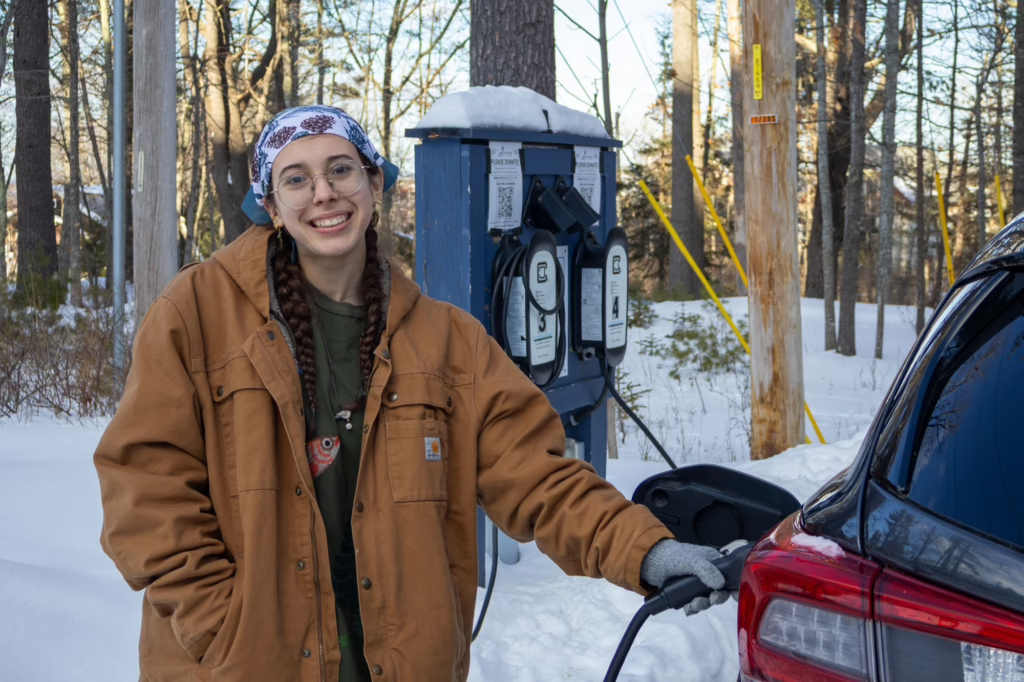
COA became carbon-neutral in 2007, and we’re on track to be completely fossil fuel-free by 2030.
From carbon-neutral to fossil fuel-free
- In 2007, COA became the first carbon-neutral college in the US
- In 2013, we became one of the first to fully divest from fossil fuels
- Today, we’re implementing a campus-wide plan to eliminate fossil fuel use entirely by 2030
We’re not just changing infrastructure. We’re reimagining what an educational institution can be in a climate-challenged world.
—COA Community Energy Center
Recent projects:
- Fossil fuel-free campus plan: Student-driven roadmap including solar expansion and deep energy retrofits
- Maine Energy Upgrade Program: A regional project to make home energy improvements more accessible
Live data from some of COA’s solar arrays:
- Pottery Studio and electric car charging station on campus (24 panels)
- Beech Hill Farm potting shed (24 panels)
Sustainability in the classroom
Human Ecology in Action

From food systems to renewable energy, our curriculum reflects the college’s commitment to sustainable living. Students craft their own interdisciplinary majors, often centered on ecological and social justice themes.
Sustainability at COA isn’t a program—it’s a mindset applied across disciplines.
- Students design their own majors in areas like marine studies, energy systems, food justice, and climate law
- Fieldwork, independent projects, and partnerships with local and global organizations are built into the academic experience
Sample courses:
- Climate Justice
- Energy, Environment, and Protest
- Applications in Food and Sustainable Agriculture Systems
- Building Science and Energy Auditing
Green buildings and design
Our campus is a living lab.
We design, retrofit, and maintain our buildings to embody COA’s sustainability ethos.
- Davis Center for Human Ecology: Built to Passive House standards
- Kathryn W. Davis Village: Solar-powered, composting toilets, heat-recovery systems
- The Turrets: Historic renovation with energy upgrades
- Solar panels, motion-sensor lighting, bird-safe glass, and non-toxic materials throughout campus
Investment and divestment
A legacy of ethical action.
In 2013, COA became one of the first colleges to fully divest from fossil fuels. Earlier, we had also rejected investments in tobacco and apartheid-era companies. Today, students help guide sustainable investments and maintain COA’s ethical investment principles.
Zero-waste vision
Rethinking waste—from policy to practice.
Through the ATLAS Zero-Waste project, COA students and staff are redesigning our materials management system.
A student-led path to rethink resources
- COA is ranked the #1 zero-waste campus in the US by the Post Landfill Action Network
- Students are creating a strategic Zero-Waste Action Plan- Stage 1 and Stage 2
- Innovations include reusable dishware programs, composting, surplus redistribution, and policy changes for procurement and packaging
Farms, food, and land stewardship
Growing change from the ground up
- Beech Hill Farm and Peggy Rockefeller Farm produce organic food for the campus and community
- Programs like Share the Harvest deliver produce to food-insecure households on Mount Desert Island
- Students engage in hands-on work in organic farming, animal husbandry, greenhouse management, and food access projects
Sustainable campus policies
Our environmental policies reflect human-ecological values in action. Students, faculty, and staff collaborate on guidelines that govern everything from energy and food to procurement and water use.
Built by the community, for the planet
- Students, faculty, and staff co-author and implement COA’s sustainability policies
- Active policies include:
- Break Free From Plastic Pledge
- Campus Environmental Initiative
- Energy Framework
- Sustainable Building Policy
- Fair Trade and Food Purchasing Standards
Stories from the Field


Do offshore wind farms harm whales? Experts weigh in as Trump labels them ‘dangerous’ [Miami Herald]
COA Steven K. Katona Chair in Marine Sciences Sean Todd and others are countering claims that offshore wind turbines are harming whales. Read More
Ready to build your own path?

Apply Now
Join a close-knit community built for curiosity, collaboration, and purpose.

connect with admissions
Talk with an admission counselor about your interests, questions, and goals.

Plan a Visit
Attend a class, meet students, and experience learning rooted in place.